
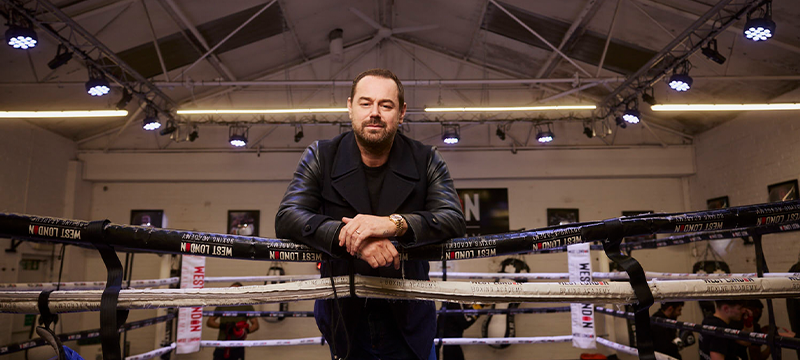
Image credit: Courtesy of Hugh Whitworth at Whitworth Media and Channel 4
Danny Dyer, Masculinity & Male Domestic Abuse
Article written by: Leo Noonan, Family Law Solicitor
Important: If you or your child is in immediate danger from domestic abuse, please call 999. If you cannot speak when calling from a mobile, press 55 when prompted.
I was late to the Danny Dyer: How to Be a Man television show.
The documentary first aired on Channel 4 in 2024, but its recent arrival on Netflix brought it back into view and, like plenty of people, that was where I eventually watched it.
Dyer spends the series asking a deceptively difficult question: what does it mean to be a man today?
There is plenty packed into that question. Masculinity. Mental health. Expectations around strength, work, relationships and fatherhood. The uneasy line between traditional masculinity and what is now readily labelled “toxic”.
But one part of the documentary stayed with me more than most.
Dyer meets male victims of domestic abuse and visits a refuge supporting men who have experienced it. The programme raises some uncomfortable questions about what happens when the person frightened of their partner, controlled within their relationship or struggling to protect themselves does not fit the image we instinctively associate with a victim.
And then, understandably for a documentary attempting to cover modern masculinity in its entirety, it moves on.
I found myself wanting the conversation to continue, because in family law, these are not abstract questions.
Can a man recognise coercive control when he has spent his life being told to ‘man up’?
What happens when abuse is psychological rather than physical?
Are male victims taken seriously?
Does being a father alter the way a man experiences domestic abuse?
And while the law itself is gender-neutral, does that always mean that access to justice feels equal in practice?
Those questions deserve answering and more than a few minutes of television.
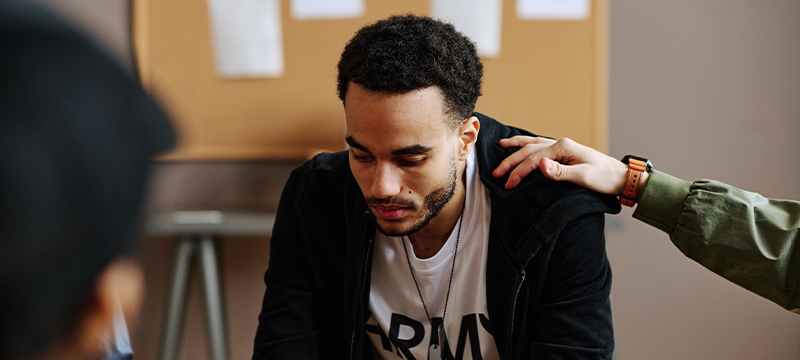
The victim we do not always picture
Domestic abuse is still often discussed through a very particular image of victim and perpetrator.
There are understandable reasons for that. Women remain disproportionately affected by domestic abuse, and any serious discussion of male victims should acknowledge that rather than attempt to compete with it.
But acknowledging that reality needn’t make male victims invisible.
In the year ending March 2025, an estimated 1.5 million men in England and Wales experienced domestic abuse. While it is not a marginal number in comparison (2.2 million women), it remains a significant part of the wider picture, yet male victimisation can still feel less visible in public discussion.
Part of the difficulty may be that male victims do not always fit the assumptions we carry about what domestic abuse looks like.
In practice, I have encountered men who worry that they will be seen as weak, that they should have been able to defend themselves, or they struggle with the idea of describing themselves as a victim at all. More interestingly, others worry that simply being male makes them more likely to be viewed as the aggressor.
It is these assumptions that can often misalign with the reality on what domestic abuse can be defined as. It is not as simple as one person being physically stronger than another.
While physical domestic abuse on men exists, a man can also be controlled without being physically overpowered. He can be isolated, monitored, humiliated, threatened or financially restricted. He can be made to doubt his own judgement. He can be frightened of what will happen if he leaves. He can be worried about losing contact with his children.
He can experience all of that while still believing that, somehow, he should simply be able to deal with it.
What if nobody hits you?
One of the most persistent misconceptions around domestic abuse is that it must involve physical violence.
It does not. And, yes, that works both ways.
In my experience, male victims commonly describe psychological, emotional and verbal abuse, coercive or controlling behaviour, monitoring and harassment. After a relationship ends, that behaviour can continue in different ways, particularly through repeated contact, threats or the use of children as a means of pressure.
That can be harder to recognise.
There may be no visible injury. No single incident that appears, on its own, to explain why somebody feels frightened, diminished or trapped. Instead, the effect can build gradually.
A remark becomes a pattern. A disagreement becomes humiliation. Monitoring becomes normalised. Someone begins to question where they go, who they speak to, what they spend and whether their own reactions are reasonable.
Over time, that can have a profound effect.
I have seen people become degraded and belittled to the point where they are a shell of their former selves. Their confidence, judgement and sense of what is normal within their relationship can be slowly eroded.
For men, there can be another layer to this.
If your understanding of domestic abuse is centred around physical violence, and your understanding of masculinity tells you that you should be strong enough to cope, it becomes much easier to dismiss what is happening.
The absence of physical violence does not make the impact less serious. Nor does physical strength make someone immune from being controlled and psychologically worn, or intimidated.
Why didn’t you fight back?
This is a particular question that can hang over male victims of domestic abuse.
On the surface, it sounds simple. If a man is physically stronger, why would he not defend himself? Why would he allow the situation to continue?
The problem with that thinking is that it places responsibility on the victim for how they responded to the abuse rather than on the person who caused it.
For some men, there is a very real fear that physically responding could immediately change how the situation is perceived.
I have encountered men who worry that, if they react, they will be viewed as the aggressor. Others feel that they have to go further in explaining or justifying what happened because they are male.
That can leave someone in an extremely difficult position.
Do nothing, and the abuse may continue.
React, and there may be a fear that the reaction becomes the story.
But there is another version of the same question when the abuse is not physical.
Why didn’t you challenge it? Why didn’t you leave? Why did you allow someone to speak to you like that, control your finances, monitor you or gradually wear down your confidence?
Again, those questions can sound reasonable from the outside, but from within the relationship; it’s not that simple.
Controlling and coercive behaviour often develops gradually. What begins as concern can become monitoring. Criticism leads to humiliation. Small compromises transpire to be restrictions. Over time, the person experiencing it can begin to question their own judgement and lose sight of what a healthy relationship should look like.
It is one reason why context matters so much when someone eventually seeks help. Is domestic abuse one isolated moment? It can be, but more commonly it is not; the history of the relationship, what happened before an incident, what happened afterwards and whether there has been an ongoing pattern can all be important in understanding what has actually taken place.
There is also the pressure men can place on themselves.
Some will still believe that being frightened of a partner is something they should be embarrassed about. Others will convince themselves that they should simply be able to manage the situation without involving anybody else.
From what I have seen, that attitude is improving as conversations around mental health and domestic abuse become more open.
But it has not disappeared.
Perhaps, then, we ought to be asking ourselves: ‘Why did we expect him to recognise, resist and resolve the abuse entirely on his own?’ rather than asking him, ‘Why didn’t you fight back?’
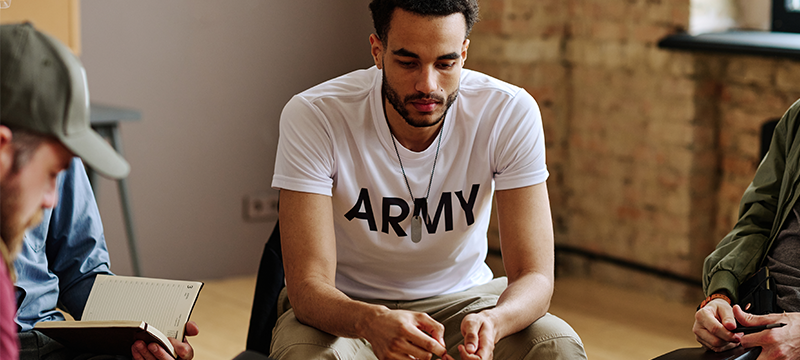
Is the legal system against men?
It is a provocative question. It is also one that needs a better answer than either ‘yes’ or ‘no’.
For my part, I do not believe the Family Court is institutionally biased against men.
The law does not begin from the position that one gender is more deserving of protection than another. Where allegations are made, the court has procedures available to hear those allegations, allow the other person to respond and consider the evidence before it. Its role is to apply the law to the circumstances of the individual case and reach an informed decision.
That there is key, because there is a difference between questioning whether parts of the system could work better for male victims and suggesting that the entire family justice system is designed against them.
I do not believe the latter to be true.
But that should not end the conversation.
A legal system can be neutral in the protections it offers while people still experience very different levels of access to those protections.
This is where I believe there is a more difficult question to answer.
A man who believes he is experiencing domestic abuse may already have had to overcome some of the barriers discussed earlier in this article. He may have struggled to recognise what was happening. He may have delayed asking for help. He may be concerned about whether he will be believed.
If proceedings have already started, he may also find himself responding to allegations while trying to understand what legal support is available to him.
And that is where equality on paper can begin to feel rather different in practice.
The court can only determine the case that is ultimately put before it. But putting that case forward properly can require legal advice, preparation and, in some circumstances, representation.
Those things cost money.
Where public funding is unavailable and somebody cannot afford private legal representation, there is an obvious risk that they will have to navigate an already difficult situation without the level of professional support they need.
I see this less as evidence of a court system biased against men and more as a question of access to justice.
There is an important distinction between the two.
A right that exists on paper is not quite the same thing as a right you can realistically afford to exercise.
That is particularly important when domestic abuse allegations and children are involved. The consequences of getting things wrong can be significant, and people on both sides of an allegation need the opportunity to explain their position properly.
I have also encountered men who are concerned that the allegation itself has already determined how they will be viewed.
My advice in those situations is the same: be open, honest and transparent about what has happened. Context is key. A solicitor, support organisation or court cannot properly understand the circumstances if they are only given part of the picture.
I do not believe male victims should have to overcome a different legal test simply because they are men, and I do not believe the Family Court deliberately imposes one.
But I do believe we should be willing to ask whether everybody has the same realistic opportunity to access the advice and support needed to navigate that system.
For me, that is where the more credible criticism lies.
The cost of reaching justice
If access to the law is part of the problem, then we also have to talk about money.
The latest Ministry of Justice figures make for interesting reading. In 2025-26, within civil representation, just 5% of civil legal aid clients recorded in the domestic violence category were male. That proportion has actually fallen from 7% in 2016-17.
That statistic does not prove that legal aid favours women.
It does, however, leave us with a question worth asking: why are men so poorly represented among those accessing it?
I suspect there is no single answer, however some of it may come back to the issues already discussed.
Stigma.
A reluctance to describe themselves as a victim. The belief that they can sort things out themselves. In my experience, men will sometimes approach a solicitor considerably later than they perhaps should have done, once a situation has escalated and their options have become more complicated.
There can also be difficulties when allegations are being made by both sides.
A man may come to a solicitor not only describing behaviour he considers abusive but already facing allegations himself. At that point, the legal and factual picture may be considerably more complicated than simply identifying one person as the victim and the other as the perpetrator.
Yet legal advice is often exactly what is needed to unpick that picture.
And, bluntly, legal advice costs money.
For those that qualify for legal aid, public funding can provide an important route to advice and representation. For those who do not, private legal costs can become a very real obstacle.
As domestic abuse solicitors, we can explore different ways of assisting people. A non-molestation order may be entirely necessary in one case. In another, a warning letter or different course of action may be more appropriate. Domestic abuse does not lend itself particularly well to a ‘one size fits all’ response.
But somebody needs access to advice in the first place to understand that distinction.
For me, this is one of the more difficult parts of the conversation around male victims.
We can say, quite correctly, that the law is available to men and women alike. We can say that the courts are not institutionally biased against men. We can point towards the protections that exist.
But if someone cannot afford to understand those protections, obtain advice about their circumstances or properly respond when proceedings have already begun, the existence of those rights may offer limited comfort.
How legal aid funding should evolve to address that is a much bigger policy question, and certainly not one I can answer alone.
But a system concerned with access to justice should at least be prepared to ask it.

What legal protection is actually available?
For all the discussion around masculinity, stigma and access to justice, there comes a point where somebody simply needs to know what their options are.
And there are options.
A non-molestation order can be used to protect a person, or their child, from abuse, harassment, threats or intimidation. An occupation order can regulate who is entitled to live in the family home, or who can enter the surrounding area.
Where children are involved, legal advice may also be needed around child arrangements and the other protective applications.
But I would resist the idea that every domestic abuse case should automatically follow the same route.
Sometimes urgent court protection is absolutely necessary.
Sometimes the first step may be advice, a formal warning letter, gathering evidence or simply understanding the legal position before deciding what to do next.
That distinction needs considering.
In my experience, people can sometimes arrive expecting that there is one prescribed legal response to domestic abuse. There is not. The right course will depend on what has happened, whether there is an immediate risk, whether children are involved and what outcome the person duly needs.
That is why I would generally encourage somebody to seek advice sooner rather than later.
If the abuse is taking place through messages, emails or social media, preserve them. Screenshots or screen recordings are evidence. So can medical evidence, where relevant, and records that help establish an ongoing pattern of behaviour.
Legal aid may be available for some domestic abuse matters, subject to the relevant evidence and financial eligibility requirements. Importantly, you do not need to have gathered all of that evidence before speaking to a legal advisor. You can apply for legal aid through Leonard Solicitors online.
And if somebody tells me that what they are experiencing does not feel ‘serious enough’ to justify speaking to a solicitor, my answer is fairly simple.
There is no harm in asking.
I would much rather somebody came to me and, having heard what was happening, I was able to tell them that matters did not need to be escalated than have them arrive months later, after the situation had deteriorated, unsure of what to do next.
Seeking legal advice does not commit somebody to court proceedings.
Sometimes knowing where you stand is enough to help you decide what happens next.
Asking for help does not undermine masculinity
Perhaps the most useful thing Danny Dyer’s documentary does is not tell us what a man should be.
It asks whether some of the standards we have inherited still serve men particularly well.
There is nothing inherently wrong with strength, resilience, responsibility or wanting to protect the people around you. I would argue that those can be positive qualities.
The difficulty comes when strength is interpreted as silence.
When resilience means enduring behaviour that is slowly dismantling you. When being the provider means accepting financial control. When being protective means tolerating threats involving your children. Or when being a man means believing that fear, humiliation and vulnerability are things you simply ought to deal with alone.
That is where some traditional expectations of masculinity can become less helpful.
In my experience, attitudes are changing. Men are increasingly willing to talk about mental health, relationships and abuse in a way that perhaps would have been far less common before and during the pandemic. The stigma has not disappeared, but the conversation is moving the needle.
That is positive.
Asking for help is not an admission of weakness. If you are experiencing domestic abuse, seeking support can help you understand the risk you face, the protection available to you and, where children are involved, what steps may be needed to protect them too. Speaking to a solicitor does not automatically mean starting court proceedings, but it does mean you do not have to make those decisions without understanding your legal position.
And sometimes seeking help means recognising that what you have been carrying alone has gone far beyond what anybody should reasonably be expected to tolerate.
The documentary left me with more questions about male domestic abuse than it had time to answer.
That’s not criticism. Sometimes the value of starting a conversation is that somebody else decides it is worth continuing.
For me, one question remains particularly important.
If our idea of masculinity requires a man to recognise abuse, resist it, resolve it and recover from it entirely on his own, perhaps it is not the man we should be questioning.
Perhaps it is our own definition of strength.
Where to get support
If some of the behaviours discussed in this article feel familiar and you are unsure whether what you are experiencing is domestic abuse, speak to a specialist domestic abuse service or seek legal advice.
If you know that you are experiencing domestic abuse, please seek support. You do not have to manage it alone. If you or your child is in immediate danger, call 999.
There are specialist organisations that support male victims of domestic abuse, both nationally and locally.
Men’s Advice Line provides confidential support specifically for male victims of domestic abuse. Its freephone helpline is available on 0808 801 0327, Monday to Friday, 10am to 5pm, with webchat also available.
For those in Southampton, PIPPA provides domestic abuse advice and support to adults of all genders. The helpline can be contacted on 023 8091 7917.
Across Hampshire, Stop Domestic Abuse provides free and confidential support to people affected by domestic abuse, including dedicated support for male victims. Its main helpline is 0330 0533 630.
In Dorset and the Bournemouth area, PARAGON provides practical and emotional domestic abuse support. Its Dorset team can be contacted on 0800 032 5204.
If you’re in immediate danger, call 999.
Understanding your legal options
Support does not always have to mean court proceedings.
If you are experiencing domestic abuse, have concerns about contact with your children, have received court papers or simply want to understand where you stand legally, speaking to a family solicitor can help you make sense of the options available.
At Leonard Solicitors, we advise people experiencing domestic abuse on the protections available through family law, including non-molestation orders, occupation orders, and issues involving child arrangements.
My advice is not to wait until you feel you have reached some undefined threshold where the situation is finally ‘serious enough’.
Ask the question.
Contact us today on 023 8023 4433 or online via our contact form.
About the author, Leo Noonan
Leo Noonan is a Family Law Solicitor at Leonard Solicitors LLP, advising on divorce and separation, financial settlements, arrangements for children and protective injunctions. He has worked exclusively in family law since 2019.
Leo takes thoughtful, practical approach, helping clients understand their position and consider their options in the context of their individual circumstances.